
Professional Spray Painting Job Work for plastic, automotive and industrial components. Get quality finishing for two wheeler and injection molded parts.
Spray Painting Job Work for Plastic, Automotive & Industrial Parts-
When a plastic or automotive component needs more than just a basic finish, professional Spray Painting Job Work can make a significant difference in its appearance, surface quality and overall presentation. A properly painted component can have a cleaner appearance, consistent colour and a finish that is suitable for its intended application.
Today, manufacturers across automotive, two wheeler, electric vehicle, consumer product and industrial sectors use specialized painting processes for plastic and molded components. Instead of setting up a complete painting facility in-house, many manufacturers prefer working with experienced job-work partners who can handle surface preparation, colour application, finishing and production requirements.
Spray Painting Job Work is particularly useful for companies that manufacture plastic components but do not want to invest heavily in dedicated painting infrastructure, equipment, manpower and process development.
From automotive plastic components to injection molded parts, a suitable painting process can help manufacturers achieve a consistent and professional finish across production batches.
What Is Spray Painting Job Work?
Spray painting job work is a manufacturing service in which a specialized painting facility performs the required coating or colour-finishing process on components supplied by a customer.
Depending on the component and application, the process may involve:
- Component cleaning
- Surface preparation
- Masking of specific areas
- Primer application where required
- Spray paint application
- Colour matching
- Multiple coating stages
- Drying or curing
- Surface inspection
- Final quality checking
- Packing and dispatch
The exact process depends on the material, component design, required appearance and end-use application.
For manufacturers, this approach can reduce the need to maintain a complete painting operation internally while allowing production to remain focused on molding, fabrication, assembly or product development.
Industrial Spray Painting Job Work -
Industrial Spray Painting Job Work is used for components that require a professional and consistent surface finish for industrial applications.
Industrial components can differ significantly in shape, material, size and surface requirements. Some parts may require a simple colour finish, while others may need a particular appearance, coating thickness or surface treatment.
A professional job-work facility can help manage different production requirements through controlled preparation and painting processes.
Industrial spray painting may be suitable for:
- Plastic industrial components
- Machine covers
- Equipment panels
- Electrical enclosures
- Automotive components
- Product housings
- Decorative components
- Molded plastic parts
- Consumer product components
For companies producing components in batches, outsourcing painting can also provide greater production flexibility.
Instead of purchasing painting equipment and managing a separate department, manufacturers can send molded or manufactured components to a specialized painting service provider.
Plastic Parts Painting Job Work -
Plastic Parts Painting Job Work requires a different approach from conventional metal painting. Plastic surfaces can have different characteristics depending on the material, molding process, surface texture and component design.
Before painting, the surface generally needs to be properly cleaned and prepared. Any dust, oil, mold-release residue or other contamination can affect the final appearance.
The painting process may include:
- Component inspection
- Cleaning and surface preparation
- Masking
- Primer application if required
- Spray coating
- Drying or curing
- Visual inspection
- Final packing
The objective is to achieve a uniform and visually consistent finish across the required quantity of components.
Plastic painting is commonly required for automotive parts, two wheeler body components, electrical products, consumer products and various molded plastic applications
Automotive Spray Painting Services-
The automotive industry requires components that meet both functional and visual expectations. This is why Automotive Spray Painting Services are commonly used for plastic and molded automotive components.
Automotive plastic parts can include exterior panels, covers, trims, guards, visors and other visible components.
The appearance of these parts can have a direct impact on how the finished vehicle or product is perceived by customers.
A professional automotive painting process focuses on:
- Consistent colour
- Smooth surface appearance
- Proper coverage
- Controlled application
- Repeatable production
- Clean finishing
- Batch-to-batch consistency
For automotive manufacturers and component suppliers, outsourcing this work can be a practical alternative to establishing a separate painting line.
Plastic Spray Painting Services for Molded Components -
Plastic Spray Painting Services are particularly useful when manufacturers need to add colour or a specific visual finish to molded plastic components.
Injection molding can produce components in different shapes, sizes and surface textures. However, some products require additional painting after molding to achieve the desired appearance.
Painted plastic components can be used in:
- Two wheelers
- Electric scooters
- Electric bikes
- Automotive products
- Industrial equipment
- Consumer products
- Electrical products
- Decorative applications
The painting requirement can vary from a single colour to multi-stage or specially finished components.
For this reason, the painting process should be selected according to the material, component geometry and final application rather than using the same process for every part.
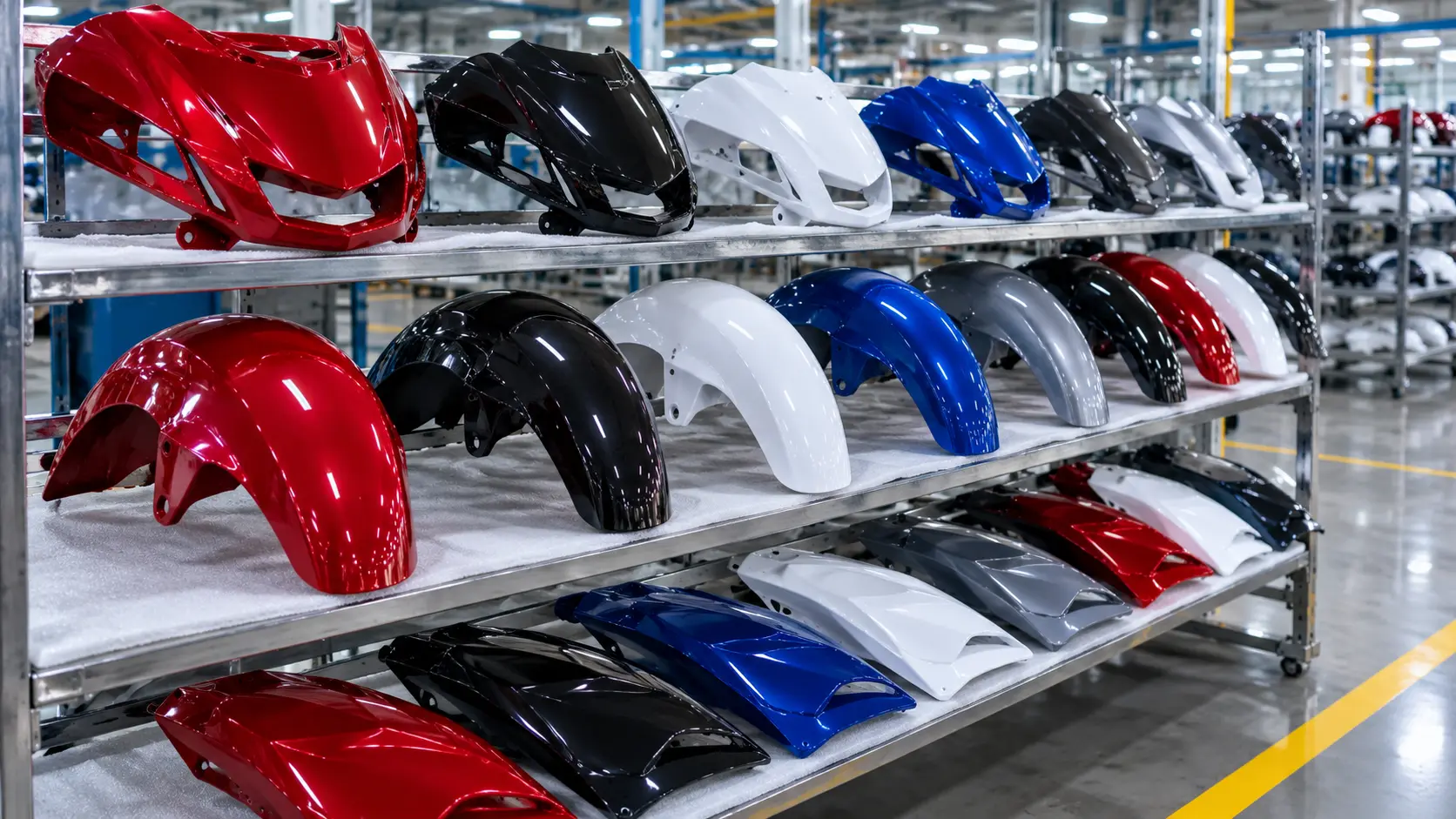
Two Wheeler Parts Painting -
The two wheeler market includes motorcycles, scooters, electric scooters and other personal mobility products. Many visible plastic components require painting or finishing before they become part of the final vehicle.
Two Wheeler Parts Painting can be required for components such as:
- Side panels
- Front panels
- Rear body parts
- Mudguards
- Headlight surrounds
- Visors
- Covers
- Decorative trims
- Battery covers
- Electric scooter body panels
The quality of these components matters because they are often directly visible to the end customer.
A consistent painting process helps maintain a uniform appearance throughout a production batch. This is especially important when several components are assembled together on the same vehicle.
Injection Molded Parts Painting -
Injection Molded Parts Painting involves painting components produced through an injection molding process.
Injection molded parts may require painting for several reasons. The manufacturer may want a particular colour, a different surface appearance, branding-related finishing or an appearance that cannot be achieved through molding alone.
The quality of the final painted component depends on several factors, including:
- Plastic material
- Molded surface condition
- Cleaning
- Surface preparation
- Paint compatibility
- Application technique
- Drying or curing
- Handling after painting
This is why molded components should be evaluated before starting regular production.
A suitable painting process can then be selected according to the component and its intended application.
Why Outsource Spray Painting Job Work?
Setting up an in-house painting facility requires investment in equipment, workspace, ventilation systems, manpower, process development, maintenance and quality control.
For manufacturers with changing production volumes, maintaining a dedicated painting operation may not always be practical.
Outsourcing Spray Painting Job Work can provide several advantages.
1. Reduced Infrastructure Investment
Manufacturers can avoid investing heavily in a dedicated painting setup.
2. Production Flexibility
Job-work arrangements can be useful when order quantities change from one project to another.
3. Specialized Process
An experienced painting team can focus specifically on surface preparation and finishing requirements.
4. Consistent Appearance
Controlled painting procedures can help improve colour and finish consistency between production batches.
5. Focus on Core Manufacturing
Manufacturers can concentrate on molding, product development and assembly while the painting process is handled externally.
Spray Painting Process for Plastic Components -
A typical plastic painting workflow may include the following stages.
a. Component Inspection
The components are checked for visible defects, molding issues, contamination and surface condition.
b. Cleaning and Preparation
The surface is prepared before painting. Dust, oil and other contaminants need to be removed to support proper coating application.
c. Masking
Areas that should not receive paint can be covered or masked according to the component design.
d. Primer Application
Depending on the material and required finish, a suitable primer may be used to improve coating performance.
e. Spray Painting
The selected paint is applied using an appropriate spray-painting process.
f. Drying or Curing
Painted components are allowed to dry or cure according to the selected coating system and process requirements.
g. Final Inspection
Finished parts are inspected for visible defects such as uneven coverage, dust particles, colour variation or other surface issues.
How to Choose a Spray Painting Job Work Partner ?
Choosing the right painting partner is important, especially for automotive and molded plastic components.
Before starting production, manufacturers should consider:
- Experience with plastic components
- Experience with automotive parts
- Available painting infrastructure
- Production capacity
- Colour matching capability
- Quality inspection process
- Handling and packing system
- Ability to manage bulk orders
- Communication and production planning
- Ability to maintain consistent output
It is also useful to provide sample components before beginning regular production. This allows both sides to understand the expected colour, finish and quality requirements.
Applications of Spray Painted Plastic Parts -
Spray-painted plastic components are used across many industries.
i. Automotive
Automotive body components, trims, covers and decorative parts can require painted finishes.
ii. Two Wheelers
Motorcycle and scooter body panels, covers, visors and other plastic components may require painting.
iii. Electric Vehicles
Electric scooter and e-bike body components often use painted plastic panels to achieve specific product designs.
iv. Industrial Products
Machine covers, housings and other industrial components can also require surface finishing.
v. Consumer Products
Plastic housings and visible product components may use painting to improve their appearance.
Conclusion-
Spray Painting Job Work provides manufacturers with a practical way to manage plastic, automotive and industrial component finishing without necessarily establishing a complete painting facility in-house.
From Industrial Spray Painting Job Work and Plastic Parts Painting Job Work to Automotive Spray Painting Services, Plastic Spray Painting Services, Two Wheeler Parts Painting and Injection Molded Parts Painting, the right process can help manufacturers achieve a professional and consistent surface finish.
For companies working with molded plastic components, automotive parts or two wheeler body components, selecting an experienced painting job-work partner and defining clear quality requirements before production can make the overall process more efficient.
If you require bulk plastic component painting, automotive plastic painting, two wheeler parts painting or injection molded parts painting, discuss your component specifications, material, colour, quantity and required finish with a professional spray painting service provider before starting production.